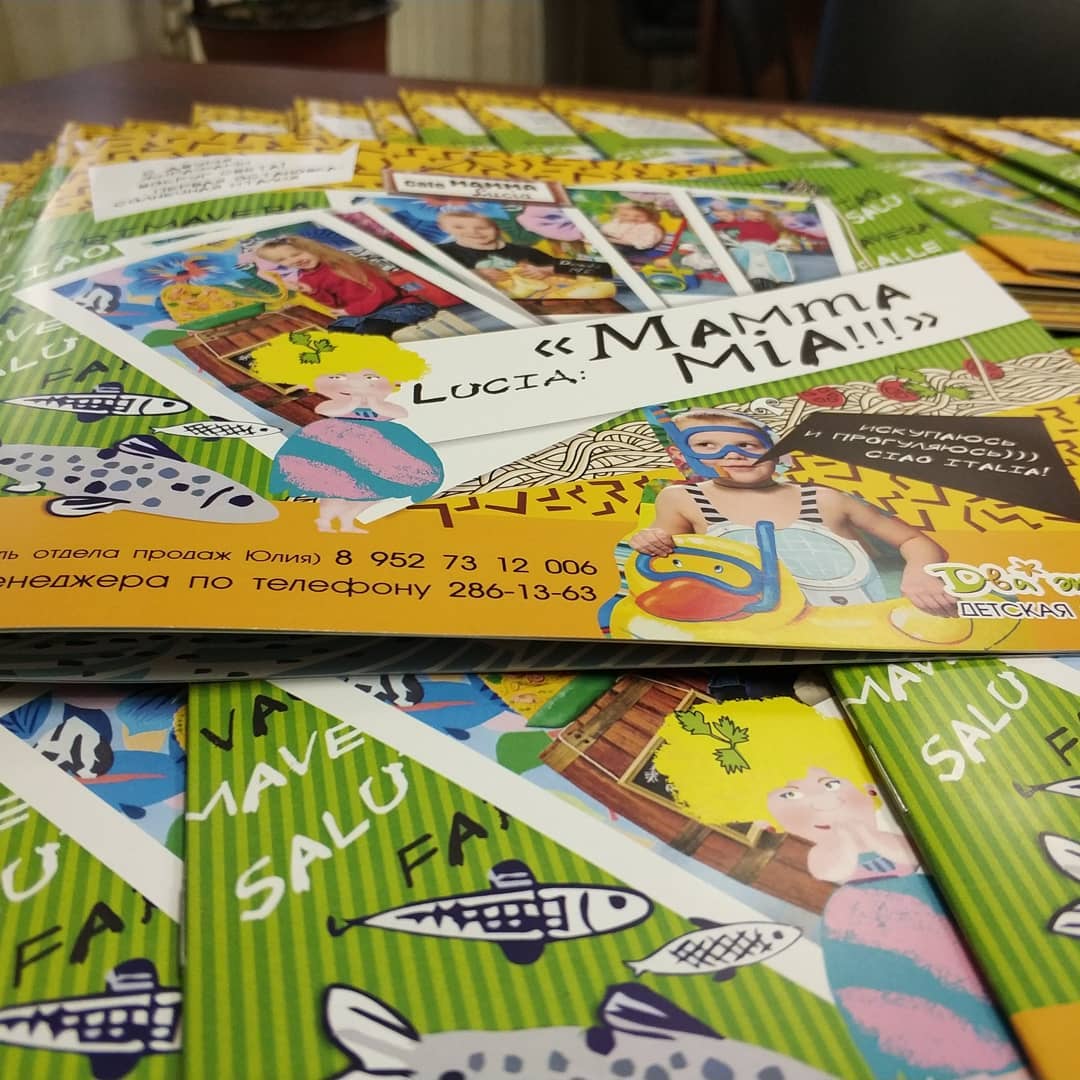
Staple brochure printing in Yekaterinburg.
Coated glossy paper 300gsm.
Format 210*210mm. Color 4+4. Inner block 8 pages.
Everyone knows what a brochure is. A brochure, a book, and a magazine are almost relatives. If earlier a brochure was any small stitched book, today in our understanding a brochure is primarily an advertising medium. The traditional method of binding sheets in a brochure has always been and remains fastening with a staple or clip.
Brochures on paperclip
The brochure, translated from French, literally means 'to stitch,' and stapling sheets together characterizes a brochure better than any other method. Besides being the most popular and one of the most affordable and proven binding methods, the number of pages when stapling ranges from four to 72 sheets. The traditional method of stapling a brochure gives it a presentable and even impressive appearance. With this type of binding, illustrations and text in the brochure cannot shift, as they would with spiral binding. The demand and affordability of producing such a brochure are ensured by its relatively low cost, which primarily makes the stapled brochure not only the most common but also capable of containing a larger volume of information compared to other types of advertising products. No one diminishes the merits of flyers or booklets, but you will agree that the more detailed text of the brochure, along with its accompanying illustrations, puts the brochure a step ahead. With a brochure, whether stapled or spiral-bound, it is possible not only to explain but also to show the product or service your company offers to the reader and potential consumer. Being not such an expensive project, a brochure made with quality paper and design can fully compete in appearance with magazines and catalogs. Like a magazine, a brochure is a multi-page product, therefore capable of containing the same full volume of information.
When folded, setting the length and width of the brochure determines its format. A4 and A5 formats are more popular and in demand more often than formats smaller than A5 and larger than A4. When ordering a saddle-stitched brochure, all options are feasible, whether it's the standard portrait imposition or landscape.
So, what does our brochure, stapled with a staple, consist of? Its main parts are called the cover and the brochure itself, the so-called text block. Anyone, even a non-specialist, understands that the cover and the main part of the brochure differ primarily in paper density. The brochure cover consists of paper with the densest texture; of course, to save money, you could print the entire brochure on the same paper, but this would not add to the brochure's attractiveness, and experts also do not recommend making too large a difference in density between the block and the cover. Such a brochure would have no commercial appeal.
The entire long list of brochure binding methods can be divided into two main types. The first type is binding by means of PUR (perfect binding), which means seamless adhesive binding, and the second is binding brochures with staples.
The PUR binding method has proven itself better than the stapling method. While in the latter case the number of sheets cannot exceed 72 pages, in the former the density of the brochure block is significantly higher. Brochures joined with staples are stitched on several binding machines, one of which is the so-called ISS (Inserter-Stitcher-Trimmer). In this case, simple and file staples are used for binding.
There are only two methods of stapling brochures. The first method is saddle stitching, which involves piercing the brochure spine in several places with a metal staple, followed by clamping it. This binding option is often used for stitching ordinary student notebooks.
In the case of the second binding method, the staple is inserted very close and parallel to the spine of the brochure from the front side. The ends of the staple come out and are secured on the reverse side. Both the first and second stitching options have their drawbacks and advantages. In the case of saddle stitching, the advantage is the unaffected appearance and design of the finished product; this method is relatively fast compared to others and does not require large material costs. It is also universal and suitable for both large and small print runs. In the case of side stitching, there are only two main disadvantages. The first, and not so significant, is the visibility of the staple on the front side of the cover. The second drawback is the incomplete opening of the brochure, which will certainly affect its lifespan. That is why the side stitching option is used in combination with the PUR (perfect binding) method. A successful combination of two binding methods will provide additional strength to the brochure, and the service life of such a publication will significantly increase.
Before ordering a brochure, whose advantages have been repeatedly stated, make sure the contractor is truly an expert in their profession. Every company that considers itself serious and reputable certainly has samples of designers' work. The approach to such an important aspect of a company's life as advertising must be thoughtful and thorough.